NBA Point Spread Betting: UK Handicap Lines and Spread Odds
 Available in US

I still remember the first NBA spread I ever bet. Lakers minus 7.5 against Sacramento, and I thought the number was arbitrary – just some figure bookmakers pulled out of thin air. The Lakers won by seven. One point. That single point taught me more about spread betting than any guide ever could: in this market, margins are everything, and understanding why that number exists separates profitable bettors from the rest.
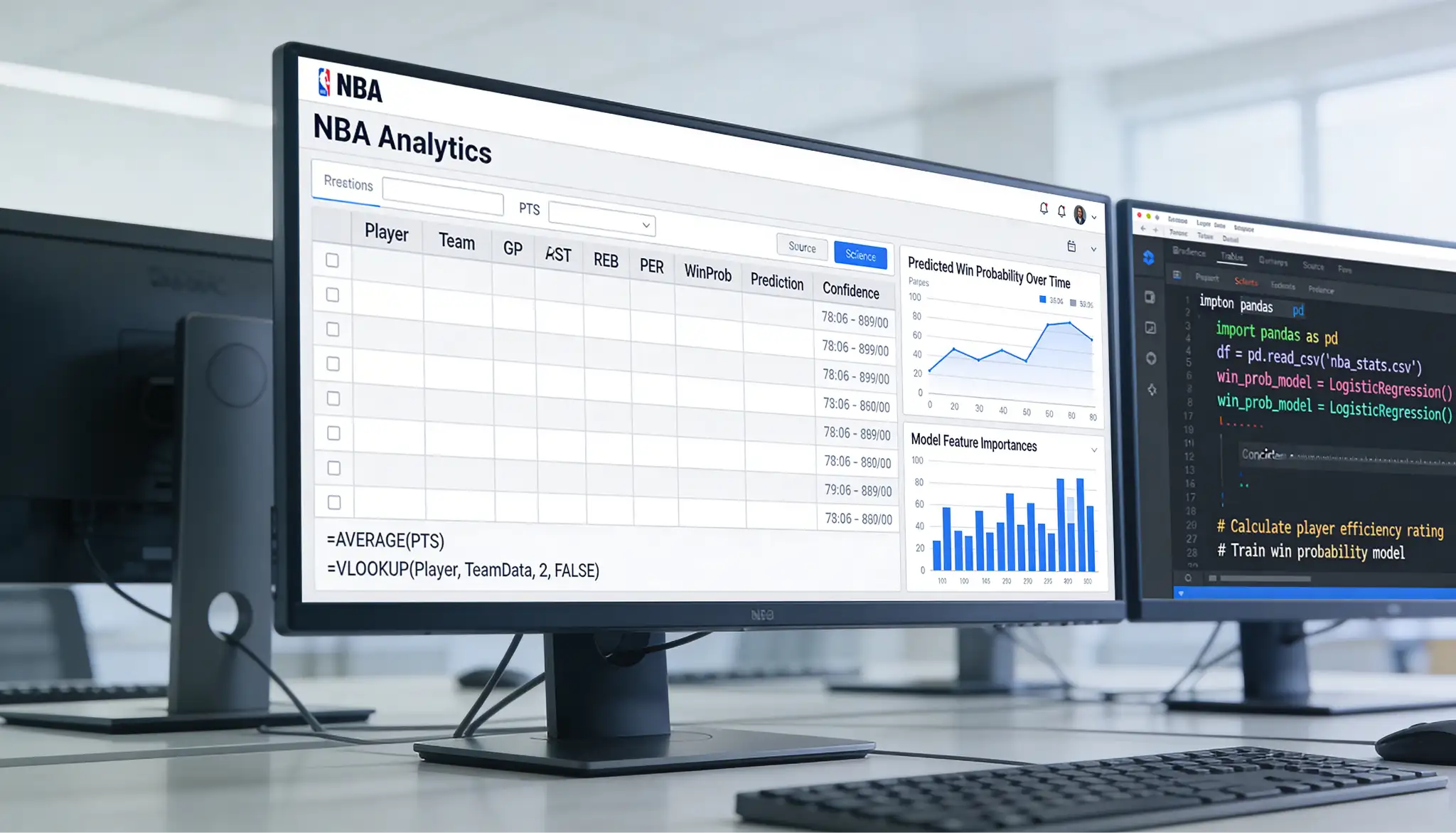
To consistently beat the spread, punters should learn how to use NBA advanced stats for betting to evaluate team performance accurately.
Find the most competitive odds and expert analysis on the premier UK NBA betting platform before placing your wagers.
The point spread is the great equaliser in basketball betting. Without it, we would all hammer favourites at terrible odds and bookmakers would adjust until there was no value left anywhere. Instead, the spread creates a scenario where backing either team offers roughly identical risk-reward profiles – at least on paper. The skill lies in finding where that balance tips ever so slightly in your favour.
Basketball is a game of runs – 20-point swings within a single game happen routinely. That volatility makes spread betting both thrilling and treacherous. A team can dominate three quarters then coast through the fourth, suddenly putting your spread bet in jeopardy despite never being in real danger of losing. If you have been betting spreads in football, the pace and scoring patterns in the NBA will feel completely different. This guide will walk you through every aspect of point spread betting, from the basic mechanics through to the strategies I have refined over nine years of analysing this market for UK punters.
NBA Point Spread Mechanics: Calculating Handicap Odds
Picture this: the Boston Celtics are hosting the Detroit Pistons. Everyone knows Boston will probably win – they are the better team at home against struggling opposition. If bookmakers simply offered odds on who wins, Boston might be priced at 1.10 while Detroit sits at 8.00. Those numbers are useless for most bettors. Enter the point spread.
The spread assigns a handicap to level the playing field. In our example, Boston might be listed at -9.5 while Detroit gets +9.5. That minus sign means the Celtics need to win by 10 or more points for a bet on them to succeed. The plus sign means the Pistons can lose by up to 9 points and still cover the spread. If you back Detroit at +9.5 and they lose 110-105, you win – they lost by five, which is within the 9.5 cushion.
The half-point exists for a specific reason: it eliminates pushes on that particular number. A spread of -9.5 can never land exactly on the number because no team can win by 9.5 points. Either the favourite wins by 10 or more (they cover) or they win by 9 or fewer (they fail to cover). When you see whole numbers like -9, a push becomes possible – if the favourite wins by exactly nine, bets on both sides are refunded.
The concept that took me longest to internalise was this: you are not predicting who wins the game. You are predicting whether the final margin will be larger or smaller than the bookmaker’s number. I have won plenty of spread bets on teams that lost outright, and lost plenty on teams that won comfortably but not by enough. The moment you stop thinking about winners and losers and start thinking about margins, spread betting clicks into place.
Covering the spread simply means your selection met the required margin. If you bet on a -6.5 favourite and they win by 8, they covered. If they win by 6, they failed to cover despite winning the actual game. This terminology – covering, beating the spread, ATS (against the spread) – appears constantly in betting discussions, and understanding it is essential before diving deeper.
Here is a practical example with numbers. A bookmaker offers:
Miami Heat -5.5 @ 1.91
Orlando Magic +5.5 @ 1.91
You stake £20 on Miami -5.5. The final score is Miami 112, Orlando 104. Miami won by 8 points. Since 8 is greater than 5.5, Miami covered the spread. Your return is £20 x 1.91 = £38.20, meaning £18.20 profit. If Miami had won 108-104 (a 4-point margin), your bet would have lost despite Miami winning outright.
Reading NBA Spread Odds on UK Bookmakers
American sports content dominates NBA betting discussions online, and that creates a translation problem for UK punters. When you see spreads quoted with -110 next to them, you are looking at American odds – a format that makes intuitive sense once you live with it, but initially just looks like gibberish. Fortunately, UK bookmakers display decimal odds by default, and that 1.91 you keep seeing is simply the decimal equivalent of -110.
The standard price for spread bets on both sides is 1.91. This number appears so frequently because it represents the bookmaker’s margin on an evenly-split market. If you stake £100 at 1.91, you receive £191 back if you win – your original stake plus £91 profit. Two bettors placing £100 each on opposite sides means the bookmaker collects £200 and pays out £191 to the winner, pocketing £9 regardless of outcome. That 4.5% margin is the cost of playing.
William Hill holds over 37% of UK sports betting PPC traffic, and their NBA spread display follows the industry standard: the team name, the spread number with its sign (positive or negative), and the decimal odds beside it. Some platforms show the spread first, others show the team name first. What matters is recognising the pattern: a negative spread means that team must win by more than that number, a positive spread means they can lose by up to that number.
The odds are not always 1.91 on both sides. Sometimes you will see a line at -6.5 with the favourite priced at 1.87 and the underdog at 1.95. This happens when money flows heavily toward one side – the bookmaker adjusts prices to incentivise bets on the other selection without moving the actual spread number. If action is overwhelming on the favourite at -6.5, they might drop the price to 1.83 or even 1.80 before eventually moving the spread to -7. Understanding this interplay between odds and spread movement helps you spot when value might exist.
One quirk of UK platforms is the occasional use of handicap terminology instead of spread. You might see “Boston Celtics -9.5” on one site and “Boston Celtics Handicap -9.5” on another. These mean identical things. Some European-influenced platforms even label it “Asian Handicap” in basketball, though that terminology is more common in football markets. Do not let the naming confuse you – the mechanics remain the same.
Understanding Line Movement
The spread you see at 2pm is rarely the spread you see at tip-off. Lines move, sometimes dramatically, and understanding why can give you a meaningful edge. I track opening lines obsessively, not because I bet them immediately, but because comparing them to closing lines reveals where the market believes the initial numbers were wrong.
Money moves lines. When bettors pile onto one side, bookmakers adjust the spread to attract action on the other side. If a spread opens at -5.5 and sharp bettors hammer the favourite, it might move to -6, then -6.5, then -7 as the day progresses. This is not manipulation – it is market dynamics. The bookmaker wants balanced books where they profit regardless of outcome. When the public money is lopsided, they adjust.
The distinction between sharp and public money matters enormously. Sharp money comes from professional bettors and syndicates with proven track records – bookmakers respect their opinions and often move lines quickly when sharps take positions. Public money is everyone else, and while it can move lines through sheer volume, bookmakers are more comfortable fading public opinion. If a line moves against heavy public betting, sharps are likely on the other side.
Injury news drives some of the most dramatic line movements. The NBA requires teams to submit injury reports, and the partnership between the league and Sportradar means real-time data flows directly to sportsbooks. When a star player gets downgraded from questionable to out thirty minutes before tip-off, you will see spreads move by 2-4 points within moments. Being plugged into injury news – Twitter alerts from reliable beat reporters, official injury report updates – lets you react before lines fully adjust.
So when should you bet? There is no universal answer, but I have found that betting early works best when I disagree with the opening number and expect market movement to go against me. If I think a spread of -3.5 is too low and anticipate it moving to -5, I bet immediately. Conversely, if I expect a line to move in my favour – perhaps because I know casual money will flood in on a popular team – waiting until closer to tip-off can net a better number.
Tracking line movement also reveals market consensus. A line that opens at -7 and closes at -7 after heavy betting on both sides suggests the number was accurate. A line that opens at -7 and closes at -9.5 suggests the market believes the favourite is even better than initially thought. Over time, comparing your own handicapping to closing lines tells you whether your opinions align with or diverge from the sharpest money in the market.
Strategies for Betting NBA Spreads
Let me be honest about expectations before discussing strategies. Professional NBA bettors aim for a 53-55% win rate on spread bets, and that narrow edge produces 3-5% ROI across a full season. If someone promises you a system that wins 60% or more consistently, they are selling fantasy. The margins in spread betting are thin, and finding even small edges requires genuine work.
The strategies that follow are not secrets – they are well-documented patterns that provide starting points for analysis. The value comes from applying them consistently, understanding when they apply and when they do not, and combining multiple factors into a coherent view of any given game.
Home and Away Trends
Home court advantage exists in basketball, though it has diminished over the years. The benefit is not just crowd noise – it includes avoiding travel fatigue, sleeping in your own bed, and the subtle officiating tendencies that favour home teams. Historically, home teams cover at rates slightly above 50%, though the margin is smaller than many bettors assume.
What matters more than raw home versus away records is the specific context. A team returning home after a brutal five-game road trip often performs better than their recent results suggest – they are tired but relieved to be home. A team hosting a back-to-back after playing the previous night has the home advantage but fatigue working against them. The interplay of these factors is where value appears.
I pay particular attention to teams playing at altitude. Denver sits at over 1,600 metres above sea level, and visiting teams – especially those in the midst of long road trips – often fade in the fourth quarter. This is not a guaranteed betting angle, but it is a factor worth including in your analysis when the Nuggets host a team playing their third or fourth road game in a row.
The Back-to-Back Factor
Teams playing the second game of a back-to-back are at a disadvantage. Their legs are heavy, their stars might see reduced minutes, and their mental sharpness is diminished. The market knows this – spreads adjust to account for fatigue – but the question is whether the adjustment is sufficient.
I have found that the market often underestimates fatigue in specific circumstances: when the back-to-back involves significant travel (playing in Miami one night then flying to Minneapolis for the next), when the first game went to overtime, or when a team’s primary ball handler is older and heavily relied upon. Young, deep teams handle back-to-backs better than veteran-heavy teams with short rotations.
The flip side is rest advantage. A team coming off three days of rest facing a team on a back-to-back has a tangible edge that usually reflects in the spread. But rest can also lead to rust – some teams perform worse after extended breaks as their rhythm dissipates. Tracking how specific teams perform in these situations over time gives you information the general market might not fully price in.
Key Numbers in NBA Spreads
In NFL betting, certain numbers like 3 and 7 are crucial because they reflect common scoring margins. The NBA equivalent is less pronounced but still relevant. Games are more likely to end with certain margins than others, and knowing these frequencies helps evaluate whether half-point differences matter for a specific spread.
The most common final margins in NBA games cluster around 4-8 points. Single-digit spreads therefore have the highest variance – the difference between -5.5 and -6.5 matters more than the difference between -12.5 and -13.5 because more games land in that single-digit range. When you are deciding whether to take a slightly worse number or wait for potential improvement, consider where the spread sits relative to these common landing zones.
Double-digit spreads introduce a different dynamic: blowout protection. When heavy favourites build large leads, starters sit in the fourth quarter and the pace slows. A 20-point second-half lead can shrink to 12 by the final buzzer simply because the winning team stopped trying. This backdoor cover phenomenon frustrates favourite backers and rewards underdog bettors who sweat through garbage time rallies.
Point Spread vs Moneyline: When to Choose Each
A question I get asked constantly: should I bet the spread or the moneyline? The answer depends entirely on the specific game and your conviction level, but some general principles help clarify when each option makes sense.
When favourites are heavy – spreads of 10 or more points – the moneyline becomes extremely expensive. A -12 favourite might have moneyline odds around 1.05, meaning you risk £100 to win £5. No matter how confident you are in them winning outright, that risk-reward is terrible. In these cases, the spread offers far better value. Even if the favourite only covers half the time, 1.91 odds on a 50% proposition beats 1.05 odds on an 85% proposition when measured by expected value.
For close games where the spread is between 1 and 4 points, the calculus shifts. A -2.5 favourite might have moneyline odds around 1.50. If you genuinely believe this team wins outright 70% of the time but only covers the spread 55% of the time, the moneyline might offer better expected value. The question becomes: do you trust them to win, or do you trust them to win by a specific margin?
I tend toward spread betting for most situations because it forces more precise handicapping. Anyone can say a good team beats a bad team – predicting the margin requires deeper analysis. Moneyline betting on small underdogs can be attractive though. A +3 underdog at 2.40 on the moneyline might offer better value than +3 at 1.91 if you think they have a reasonable shot at winning outright. If you want to explore how the fundamentals of NBA betting apply across different bet types, that broader context helps frame these decisions.
Parlays complicate this further. Mixing spreads and moneylines in the same parlay – taking a heavy favourite on moneyline to reduce juice while taking other selections on spreads – is a strategy some bettors employ. I am generally sceptical of complex parlay constructions, but the logic is sound if you have conviction that a particular favourite cannot lose outright even if they might not cover.
Common Spread Betting Mistakes to Avoid
After years of both making and observing mistakes in NBA spread betting, certain patterns emerge repeatedly. These errors often stem from emotional rather than analytical thinking, and recognising them in yourself is the first step toward elimination.
Chasing large spreads because they feel like value is perhaps the most common trap. A spread of -15.5 looks massive, and the underdog “only needs to keep it close” to cover. But those large spreads exist because the market believes the mismatch is severe. The temptation to back underdogs in blowout-looking situations often leads to watching helplessly as your selection gets demolished by 25. Large spreads are not automatically good value – they are large for a reason.
Ignoring line movement until tip-off is another frequent mistake. If you identified a bet early in the day and the line has moved 2 points against you by game time, something changed. Maybe injury news broke, maybe sharp money disagreed with your assessment, maybe the original number was simply wrong. Betting through adverse movement without understanding why the move happened is betting blind.
The urge to bet every game on a given night has destroyed more bankrolls than almost anything else. The NBA plays nearly every day during the season, with some nights featuring 10 or more games. Feeling like you need action on all of them – or even most of them – dilutes your edge. The best bettors are selective, waiting for situations where their analysis genuinely disagrees with the market rather than forcing opinions on games they have no real view on.
Overreacting to recent results – the last game, the last week – leads to poor spread assessments. A team that just lost three straight might be undervalued because the public sees a cold streak. A team riding a five-game winning streak might be overvalued for the same emotional reason. Basketball performance is volatile enough that small samples tell you less than you think. Looking at season-long trends and contextual factors matters more than what happened last Tuesday.
Mastering NBA Spread Betting
Point spread betting rewards patience and precision. The margins are thinner than most punters realise – we are not looking for winning streaks that feel impressive but long-term edges measured in single percentage points. That reality can feel disappointing at first, but it is also liberating. You do not need to be right most of the time, you need to be right slightly more often than the vig demands.
The fundamentals covered here – understanding how spreads work, reading UK bookmaker displays, tracking line movement, applying situational strategies, and avoiding common errors – form the foundation. Building from here means keeping records, analysing your results honestly, and refining your approach based on what the data shows rather than what your memory insists happened. I still learn something new about spread betting every season, and nine years in, that continued learning is what keeps me engaged with this market.
Start with small stakes on games you have genuinely researched. Track your reasoning for each bet, not just the outcome. Compare your handicapping to closing lines and ask yourself honestly whether you are finding edges or just getting lucky. The answer to that question, pursued relentlessly, is what separates those who profit from those who do not.
What does +4.5 mean in NBA betting?
A spread of +4.5 means the team is a 4.5-point underdog. They can lose by up to 4 points and your bet still wins. If they lose by 5 or more, the bet loses. If they win outright, the bet wins regardless of the margin.
What happens if the spread is exactly the final margin?
This is called a push. If the spread is -7 and the favourite wins by exactly 7, bets on both sides are refunded. This is why bookmakers often use half-point spreads like -7.5 – it eliminates the possibility of a push on that number.
Why do NBA spreads have half points?
Half points prevent pushes on that specific number. A team cannot win by 6.5 points, so a spread of -6.5 will always produce a winner and loser rather than a refund. This gives bookmakers more predictable outcomes and removes the uncertainty of push scenarios.
Can the point spread change after I place my bet?
The spread can change for future bettors, but your bet is locked at the number you accepted. If you bet -5.5 and the line moves to -7, your bet remains at -5.5. This is why getting a good number early can be valuable – subsequent movement does not affect your position.
Created by the ”how to bet nba” editorial team.