
NBA Home Court Advantage: ATS Betting Trends Analysis
 Available in US
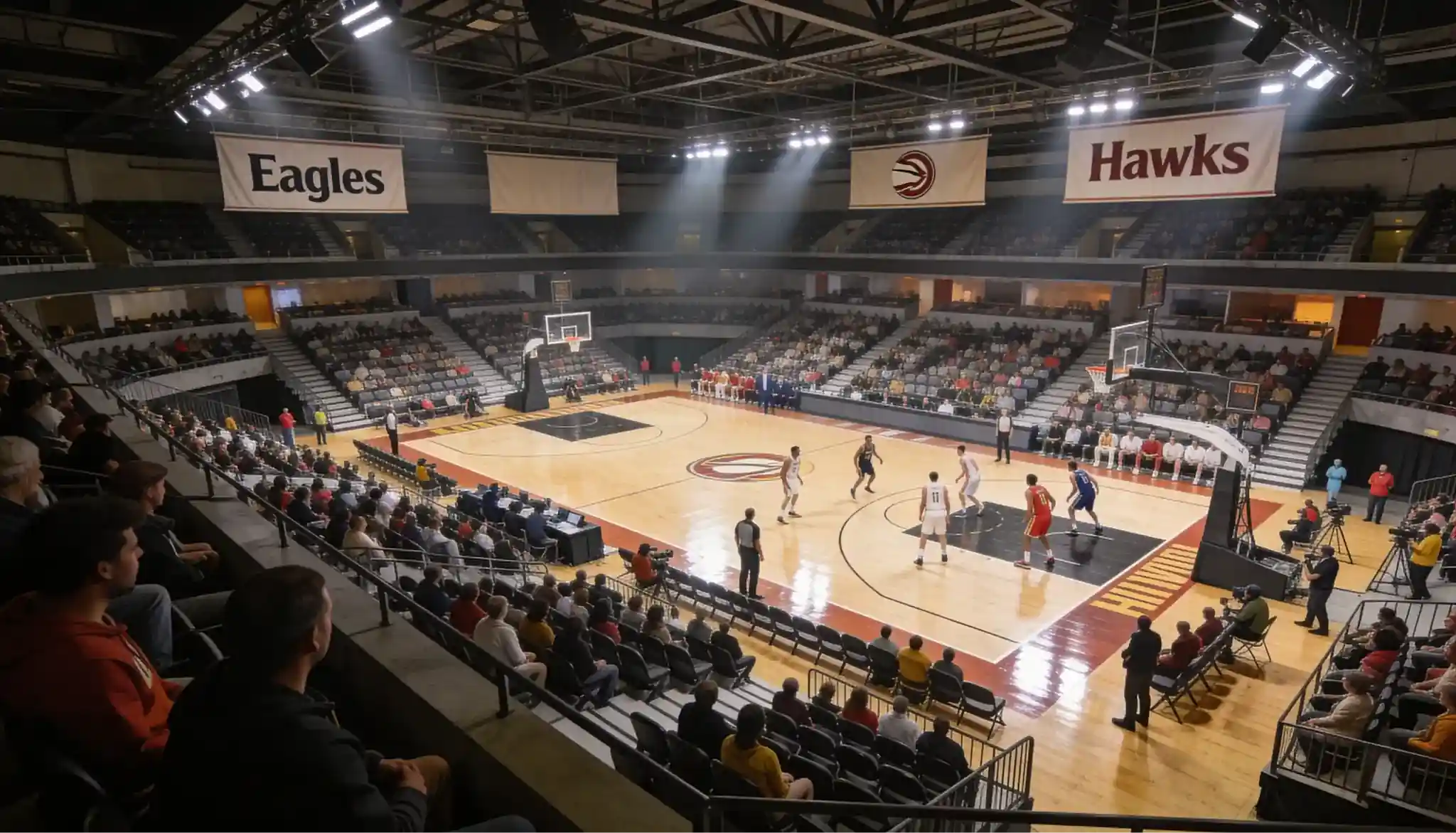
The bubble changed everything I thought I knew about home court advantage. When the NBA played in that empty Orlando arena during 2020, home teams won just 49.8% of games – essentially a coin flip. That stark evidence forced me to reconsider how much of basketball’s home edge comes from the crowd and how much from other factors. Turns out, the answer is complicated and worth understanding for anyone betting seriously on the NBA.
Home court advantage in basketball has traditionally meant roughly a three-point edge built into betting lines. Home teams have historically won around 60% of NBA games, creating a measurable advantage that bookmakers price into every spread. But that advantage has been shrinking for years, and understanding why – and when it still matters – separates sophisticated bettors from those applying outdated assumptions.
For UK punters who rarely watch games in American arenas, home court advantage remains somewhat abstract. You do not feel the crowd energy or understand the specific atmospheres different venues create. Yet the effect shows up clearly in historical results, demanding consideration in your betting approach.
Historical ATS Numbers: Evaluating Court Advantage
The NBA generates over 11 billion dollars in annual revenue, with betting markets around the world incorporating home court advantage into their pricing. Historical data reveals clear patterns that inform current market expectations.
Across the modern era, home teams have won approximately 58-60% of NBA games. This win rate translates to roughly a 2.5-3.5 point edge that bookmakers build into spreads. A game that would be a pick’em on a neutral floor becomes home team -3 when played in their arena.
The advantage has declined noticeably over the past decade. From the mid-2000s when home teams won nearly 62% of games, the rate has dropped toward 55-57% in recent seasons. Travel improvements, better conditioning, and more even talent distribution have narrowed the gap.
Playoff home court advantage differs from regular season. Teams win approximately 65% of home playoff games historically, suggesting the edge increases when stakes rise. Louder crowds, more focused players, and coaching adjustments that favour familiarity might explain this playoff bump.
Specific arenas have shown stronger or weaker home effects. Altitude in certain cities creates documented physiological challenges for visiting teams. Some arenas are notoriously loud while others feel sterile. These individual variations get lost in aggregate numbers but matter for specific matchups.
The bubble season provided the cleanest natural experiment possible. With no travel, no fans, no home locker rooms, the home designation became purely nominal. Home teams went 52.5% in regular season bubble games and roughly the same in playoffs – suggesting roughly half the historical advantage comes from crowd and environment, half from other factors.
What Creates the Edge
Multiple factors combine to create home court advantage, and understanding each helps predict when the advantage strengthens or weakens for specific games.
Travel fatigue affects visiting teams, though modern charter flights and sports science have reduced this impact. A West Coast team playing an early Eastern game after a late night flight faces genuine physiological challenges. Back-to-back road games compound the effect.
Crowd noise disrupts communication and concentration. Basketball requires constant talking on defence – calling out screens, communicating switches, directing rotations. A roaring crowd makes this coordination difficult. Offensively, the rhythm of shooting might be affected by hostile atmospheres, though evidence here is mixed.
Referee influence remains controversial but statistically documented. Home teams receive marginally more favourable whistle in aggregate – slightly more free throw attempts, slightly fewer fouls called. Whether this reflects intentional bias, subconscious crowd influence, or some other factor remains debated.
Familiarity with the court matters more than casual fans realise. Every arena has slightly different sightlines, backgrounds behind the basket, lighting characteristics, and floor conditions. Players develop comfort in their home arena that visitors cannot replicate in one night.
Routine disruption affects visitors. Sleeping in hotels, eating differently, adjusting to time zones, lacking their usual pre-game facilities – these minor inconveniences accumulate into performance drag. Home teams operate in their normal environment while visitors adapt.
When It Matters Most
The UK gambling industry generated 16.8 billion pounds in gross gambling yield in 2025, with sophisticated bettors recognising that home court advantage varies significantly across situations. Identifying when the advantage peaks creates betting opportunities.
Altitude games stand out clearly. Playing at elevation without acclimatisation period affects visiting players’ stamina – they fatigue earlier, their legs feel heavy in the fourth quarter, their shooting touch suffers as muscles tire. Games in high-altitude cities deserve extra home court consideration.
Long road trips amplify the disadvantage. A team on its fifth road game in eight nights arrives tired and mentally fatigued. Meanwhile, the home team plays its first game in a week. This schedule disparity creates situations where home court advantage exceeds normal levels.
Playoff atmospheres intensify the effect. Regular season games, particularly those without playoff implications, might feature half-empty arenas and muted atmospheres. Playoff games – especially elimination games – create environments that genuinely rattle visitors and energise home players.
Divisional rivalries produce stronger home edges. Teams play each other four times during the season, building familiarity that intensifies when playing at home. The crowd knows the opponent, dislikes them specifically, and creates targeted hostility that generic road games lack.
Conversely, some situations minimise home court advantage. Nationally televised games feature more experienced referees less likely to favour the home team. Blowout-expectation games – heavy favourites visiting weak teams – often see checked-out crowds that provide little edge. Load management games where stars rest diminish the stakes on both sides.
Market Pricing
Bookmakers incorporate home court advantage into their lines, but understanding how they do so reveals potential edges when their pricing does not match reality.
The standard adjustment runs approximately three points. A matchup between evenly-skilled teams would see the home side favoured by about -3. If that same matchup occurred on neutral ground, the line would sit around pick’em. This baseline adjustment applies relatively uniformly across the league.
Sharp bettors argue the standard three-point adjustment is too large given the declining advantage. If home teams now win 56% rather than the historical 60%, the true edge might be closer to 2 or 2.5 points. Games where the home team is favoured by 3 or more might systematically overvalue home court.
Bookmakers adjust inconsistently for specific situations. A team returning home after a long road trip might see their line adjusted an extra half-point, or it might not. These inconsistencies create opportunities when your analysis identifies factors the line has not fully incorporated.
Back-to-back considerations interact with home court. A home team on the second night of a back-to-back faces fatigue that reduces their home advantage. A visitor on the second night faces compounded disadvantage. These schedule spots require individual analysis rather than applying standard adjustments.
Late-season motivation affects home court. A home team resting starters because they have locked up seeding provides a different betting situation than one fighting for playoff position. Context determines whether the standard home court pricing applies.
Applying to Your Betting
Do not assume home court advantage applies uniformly to every game. The historical 3-point edge is an average that includes games where the advantage was 5 points and games where it was 1 point. Your job is identifying which type of game you are betting on.
Study schedule spots carefully. Identify road teams on the back end of travel-heavy stretches and home teams starting home stands after rest. These situations push home court advantage above or below baseline.
Track specific arenas if you bet enough volume. Some buildings are notoriously difficult for visitors – the data shows it across seasons. Others provide minimal home edge. Building arena-specific adjustments into your handicapping creates edges the market may miss.
Consider home court advantage declining over time. If the current true edge is closer to 2.5 points than 3 points, and markets still price 3 points, systematic value exists fading home favourites in spots where other factors do not amplify the advantage. The comprehensive guide to NBA spread betting incorporates home court considerations throughout the handicapping process.
How much is home court advantage worth in NBA betting?
Historically, home court advantage has been worth approximately 3 points in betting lines. However, this edge has declined in recent years to perhaps 2-2.5 points as travel conditions improved and the league became more balanced. The exact value varies by specific arena, schedule situation, and whether the game is regular season or playoffs.
Do NBA playoff games have more home court advantage?
Yes, home teams win approximately 65% of playoff games compared to 56-58% in the regular season. The increased stakes create louder, more engaged crowds that intensify the home environment. Players and coaches also show more focus in playoff settings, potentially amplifying the benefits of familiar surroundings and routines.
Written by the editors at how to bet nba.