NBA Betting Glossary: Essential UK Wagering Terminology
 Available in US
I spent my first month betting NBA feeling completely lost. American terminology clashed with British betting language I knew from football. A friend mentioned taking the points, and I nodded along pretending to understand while secretly confused. Eventually I admitted my ignorance and started learning the vocabulary properly. That investment in terminology opened doors to resources and conversations that improved my betting immeasurably.
NBA betting terminology differs from British sports betting language in ways that can confuse UK punters new to American markets. The spread replaces the handicap, juice replaces vigorish, and various American expressions describe concepts that exist under different names in UK betting culture. Mastering this vocabulary enables you to access American betting analysis, follow line movement discussions, and communicate with the broader basketball betting community.
This glossary covers the essential terms you will encounter when betting NBA from the United Kingdom. Rather than a dry dictionary, it explains each term in context with practical examples showing how the concepts apply to your betting.
Spread and Line Terms: Decoding American Odds
The global sports betting market reached 112 billion dollars in 2025, with spread betting representing a core product. Understanding spread terminology is fundamental to NBA betting participation.
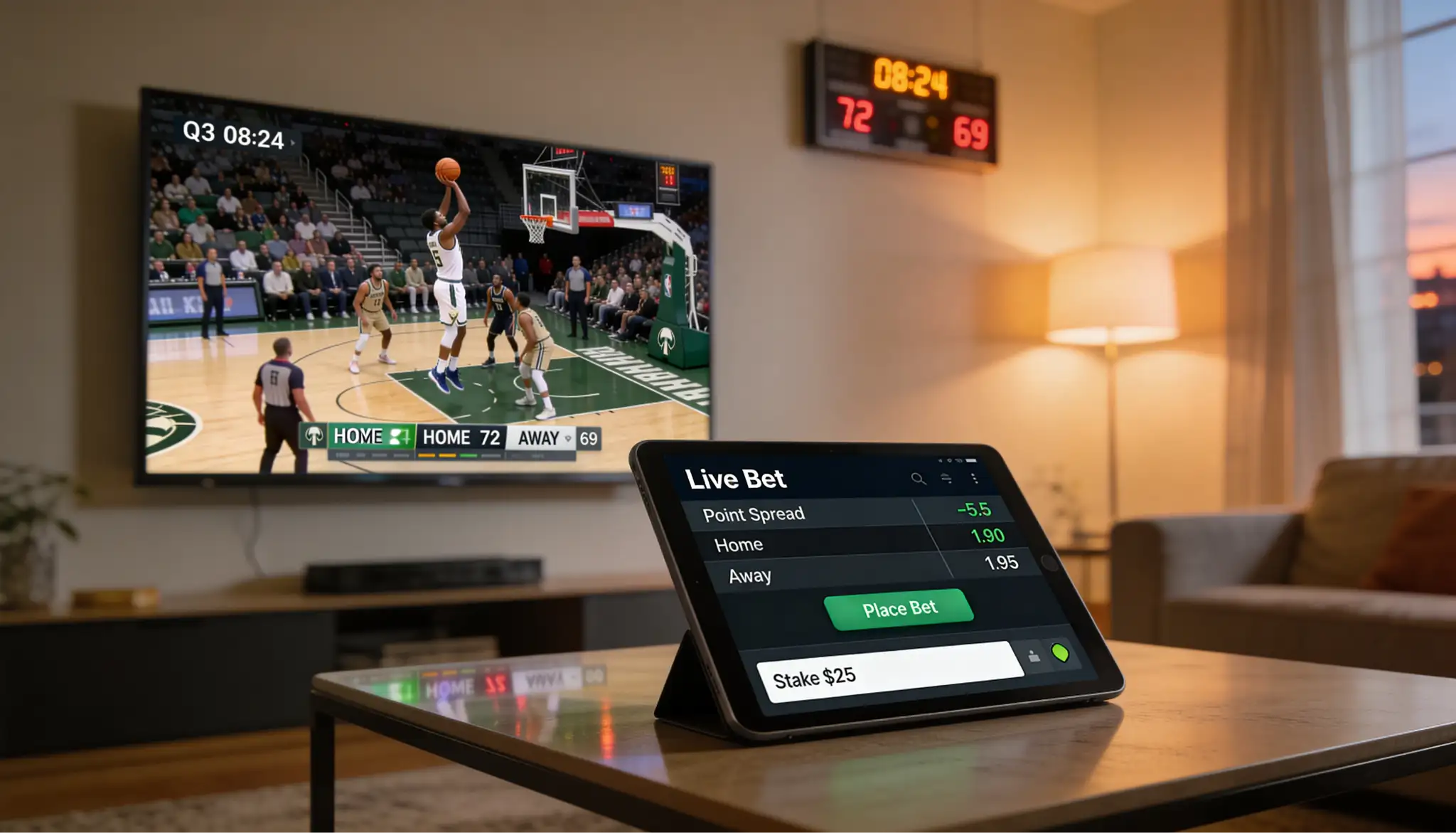
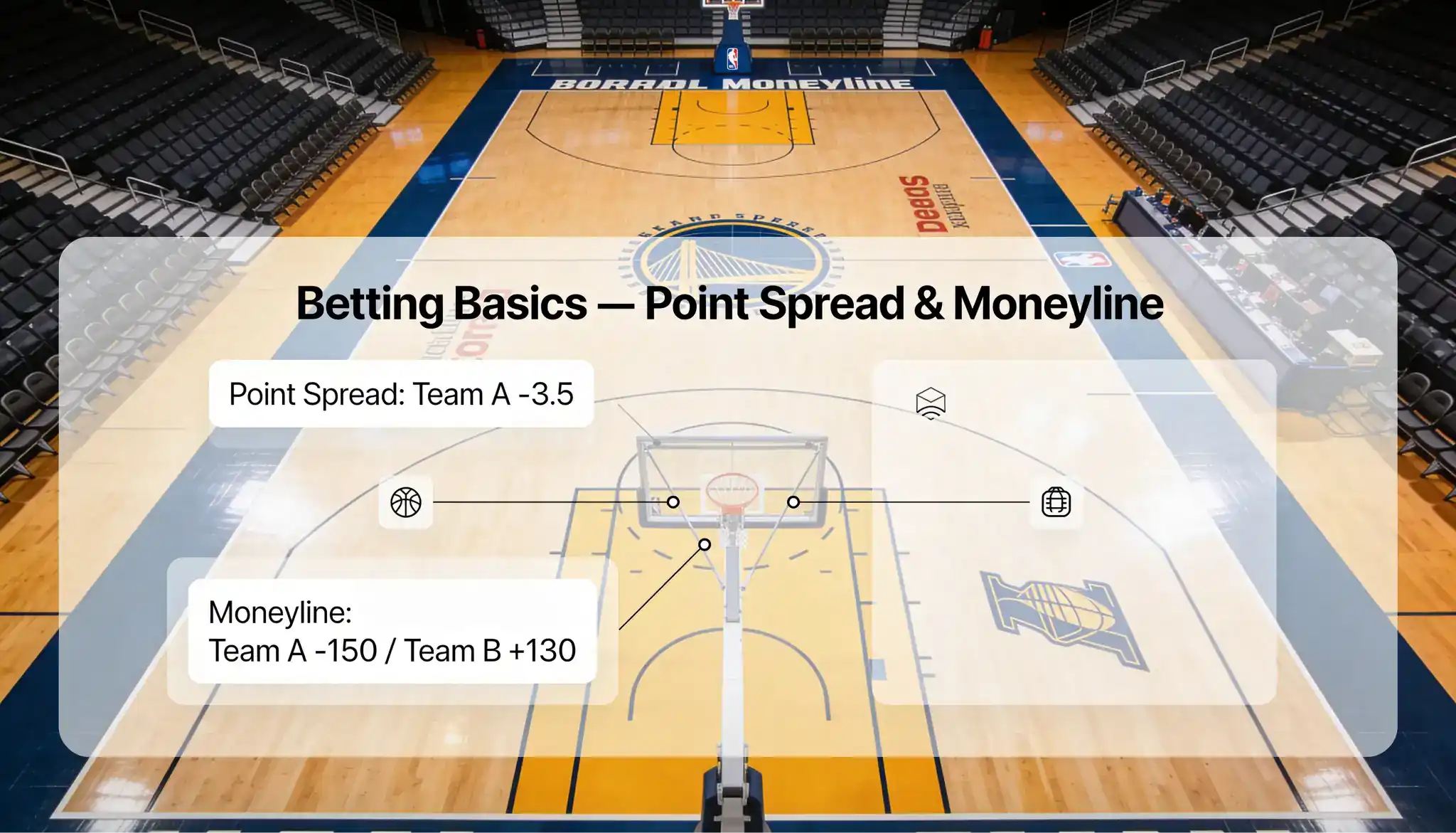
Point spread – the projected margin of victory used to level betting on both teams. A team at -5.5 must win by six or more points to cover. The underdog at +5.5 covers by losing by five or fewer, or winning outright. This concept parallels the Asian handicap in football but uses different notation.
Cover – winning a bet against the spread. If you back the favourite at -4 and they win by five, they covered. If the underdog at +7 loses by six, they covered. Covering describes the margin outcome, not just the game result.
Push – a bet that results in neither win nor loss because the result exactly matches the spread. If the spread is -5 and the favourite wins by exactly five, all spread bets push and stakes return. Half-point spreads eliminate pushes.
Line – commonly refers to the point spread, though sometimes means any betting number. When someone asks what the line is, they usually want the spread. Line movement describes how the spread changes between opening and game time.
Opening line – the first spread posted by bookmakers. Closing line – the spread at game time. The difference between opening and closing lines reflects betting action and information that emerged between those points.
Key numbers – specific margins that occur most frequently in basketball. Games often end with margins of 5, 6, 7, or 8 points, making spreads around these numbers particularly significant. Moving from -7.5 to -7 crosses a key number.
Moneyline and Odds Terms
The NBA generates over 11 billion dollars in annual revenue, with moneyline betting providing straightforward win-based markets. Understanding odds presentation helps UK bettors navigate American-formatted markets.
Moneyline – a bet on which team wins without any spread. The favourite has shorter odds; the underdog has longer odds. Unlike spread betting, the margin does not matter – a one-point win pays the same as a thirty-point win.
American odds – odds expressed as positive or negative numbers. Negative odds show how much you must bet to win 100 units; positive odds show how much you win from a 100-unit bet. Most UK bookmakers display decimal odds, but American sources use American format.
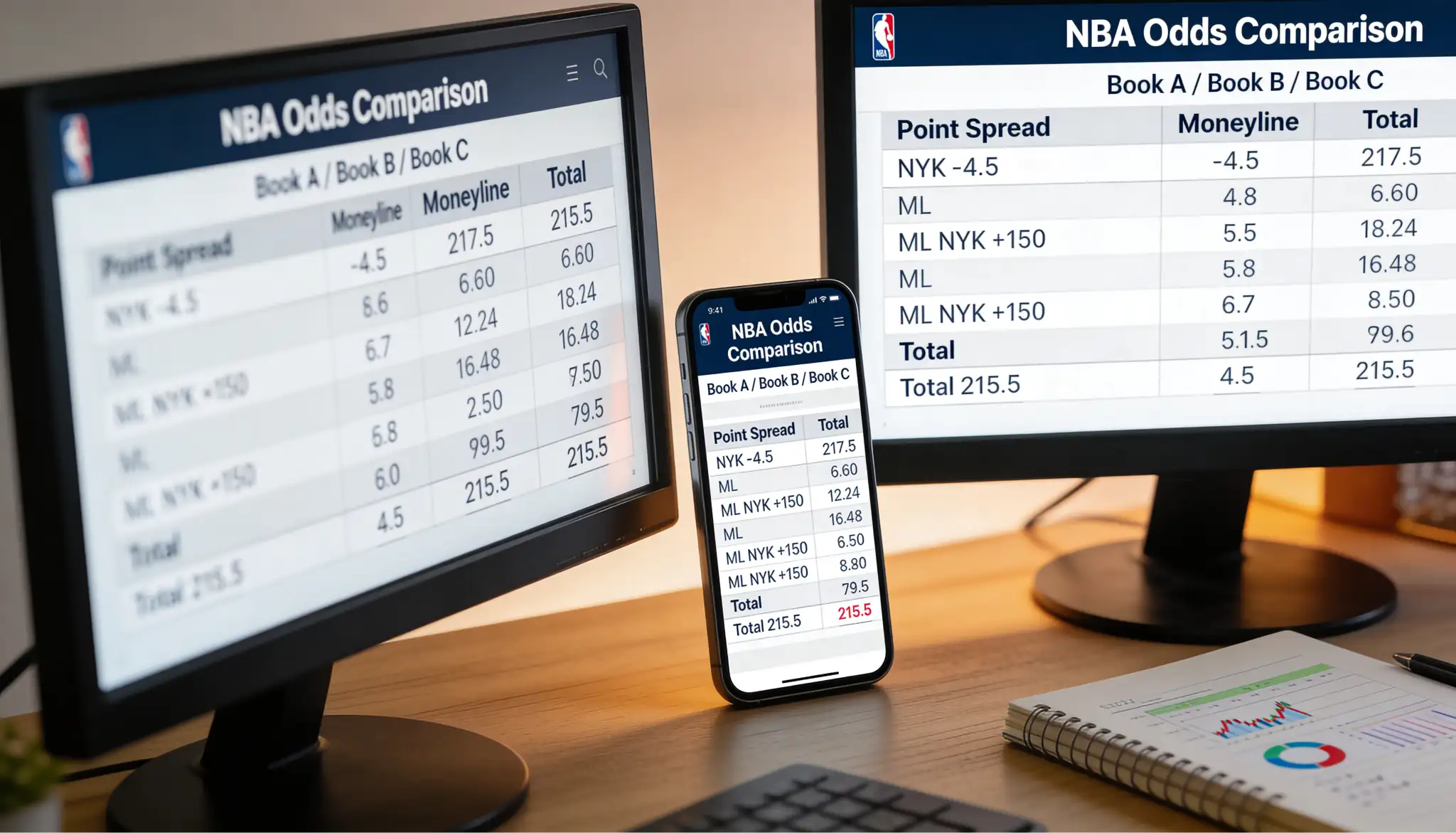
Juice or vig – the bookmaker’s commission built into odds. Standard juice on spreads is -110 on both sides, meaning you bet 110 to win 100. The difference between what winners receive and losers pay covers bookmaker margin. Also called vigorish.
Even money – odds where profit equals stake. Expressed as +100 in American odds or 2.00 in decimal odds. Rare on NBA spreads due to juice, but sometimes available on specific markets.
Decimal odds – the format UK bettors typically use, showing total return including stake. Decimal 1.91 equals American -110; decimal 2.10 equals American +110. Converting between formats helps when reading American analysis.
Implied probability – the win percentage suggested by odds. Decimal odds of 1.80 imply 55.6% probability (1 divided by 1.80). Comparing your assessed probability to implied probability identifies value.
Totals and Props
Around 58% of American bettors place wagers on NBA games, with totals and props providing alternatives to spread betting. These market terms appear frequently in American betting discussion.
Total – the combined score of both teams, also called the over/under. If the total is 225.5, over bettors need 226 or more combined points; under bettors need 225 or fewer. Totals bet on scoring volume rather than which team wins.
Over – betting that combined scoring exceeds the total line. Under – betting that combined scoring falls short of the total line. These terms describe your position on a totals market.
Game total – the full-game combined score. Half total – combined scoring in just one half. Quarter total – combined scoring in one quarter. Different timeframes create different betting opportunities.
Player prop – a bet on individual player performance. Points, rebounds, assists, three-pointers made, and combined statistical categories all form player prop markets. Props let you bet on players rather than teams.
Alt lines – alternative spreads or totals beyond the primary number. If the main spread is -5.5, alt lines might offer -3.5, -7.5, or other numbers at adjusted odds. Alt totals similarly provide numbers above and below the main total.
First basket – which player scores the game’s first points. First scorer markets offer long odds on most players with shortened odds on expected starters likely to take early shots.
Betting Strategy Terms
The UK gambling industry generated 16.8 billion pounds in gross gambling yield in 2025, with strategic bettors employing approaches that have developed their own vocabulary.
Fade – betting against something. Fading the public means betting opposite to where most recreational money flows. Fading a team means betting against them. The term implies deliberate contrarian positioning.
Steam – rapid line movement caused by coordinated sharp betting. When respected bettors simultaneously target a side, the line moves quickly – steaming in one direction. Steam moves are worth noting even if you do not follow them.
Sharp – a professional or sophisticated bettor whose action moves markets. Sharp money contrasts with square money from recreational bettors. Lines moving toward sharp positions suggest informed assessment.
Square – a recreational or unsophisticated bettor. Square money tends to favour public teams, favourites, and overs. Professional bettors often look to fade square action when market movements seem driven by casual opinion.
Chalk – the favourite in a matchup. Eating chalk means betting favourites, typically on moneyline where you risk much to win little. Heavy chalk describes a significant favourite.
Dog – abbreviated term for underdog. Taking the dog means backing the team receiving points on the spread or with longer moneyline odds. Live dog describes an underdog with genuine upset potential.
Expected value or EV – the average profit or loss from a bet repeated many times. Positive EV indicates profitable bets; negative EV indicates unprofitable bets. EV analysis drives sophisticated betting decisions.
Practical Application
Closing line value or CLV – the difference between the odds you bet and the closing line. Consistently beating closing lines indicates you are capturing value before the market corrects. CLV serves as a proxy for betting skill.
Middle – winning both sides of a bet when the final margin lands between two different numbers you bet. If you bet team A at -3 and later bet team B at +5, a team A win by four middles both bets. Rare but profitable when they occur.
Arbitrage or arb – betting both sides at different bookmakers to guarantee profit regardless of outcome. Arbs require odds discrepancies large enough to overcome margin on both sides. Also called surebets.
Bankroll – total funds dedicated to betting. Bankroll management describes how you allocate this money across bets. Unit sizing – typically 1-2% of bankroll per bet – protects against variance depleting your bankroll.
Unit – your standard bet size, used to normalise discussion across different bankroll sizes. Saying you are up fifteen units communicates results without revealing actual pound amounts. Most bettors define a unit as 1% of bankroll.
Tilt – emotional state following losses that leads to poor decisions. Betting on tilt typically means abandoning strategy, increasing stakes, or chasing losses. Recognising and managing tilt protects your bankroll.
Handle – total amount wagered on a market. Super Bowl 2025 generated a record 1.39 billion dollars in legal betting handle. Handle indicates market interest level without revealing which side received more action. The complete framework for betting NBA from the UK applies all these concepts in practical contexts.
What does covering the spread mean in NBA betting?
Covering the spread means winning your bet against the point spread. If you back the favourite at -6.5 and they win by seven or more, they covered. If you back the underdog at +6.5 and they lose by six or fewer points, or win outright, they covered. The margin relative to the spread determines the outcome, not just who wins the game.
What is juice in NBA betting?
Juice is the commission bookmakers charge on bets, also called vig or vigorish. Standard juice on spreads is -110, meaning you bet 110 to win 100. The juice ensures bookmakers profit regardless of which side wins. Different bookmakers offer different juice levels, making line shopping valuable for finding reduced juice options.
Prepared by the how to bet nba editorial staff.